
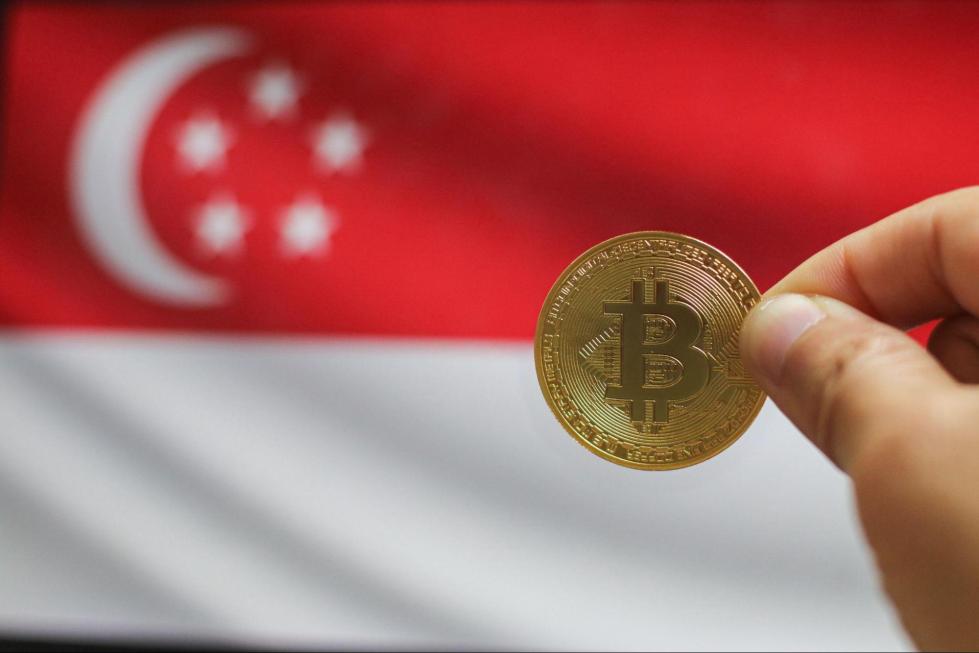
The Monetary Authority of Singapore (MAS) is taking another look at how stablecoins should operate within the financial system, and the implications could stretch well beyond local crypto markets. MAS has proposed tighter requirements for issuers, including 100% reserve backing and restrictions on offering yields to holders.
These proposals would build on the stablecoin framework introduced in 2023, but what businesses are likely to be concerned about is what clearer rules could mean for them moving money internationally. Given the city-state’s role in Asian finance, stablecoins that meet stricter standards may become more useful for cross-border settlement. And as digital assets move closer to traditional finance, traders are having to look at them in a much wider market context.
What MAS Is Now Proposing
MAS has already established a framework for certain single-currency stablecoins, with requirements covering reserve assets and redemption. The latest proposals would tighten that approach a great deal, requiring issuers to maintain reserves equal to 100% of the stablecoins they have in circulation.
Another notable part is the restriction on paying yields to holders. MAS appears to be drawing a clearer line between stablecoins designed for payments and products that behave more like investments. It’s a huge factor in business confidence: if a company receives a stablecoin from a customer or uses one to settle an international invoice, it needs reasonable certainty that the token can be redeemed at its stated value. And if businesses become more comfortable with those safeguards, using stablecoins for payments or treasury transfers can be a more realistic option.
Why Cross-Border Payments Could Be a Big Opportunity
The local consumer market may be relatively small, but the city-state’s role in Asian finance also means that changes to payment infrastructure can have consequences well beyond its borders. Take, for instance, a regional company that needs to pay a supplier in another Asian market. Traditional transfers would be able to pass through different banks and currencies, but settlement periods don’t always line up with when the money needs to arrive. In this case, a regulated stablecoin would be able to offer another possible route, particularly when companies need to move funds between entities or manage treasury balances across markets.


These developments are important for traders to keep in mind as well, since digital assets and traditional markets are more intertwined now than they used to be. When stablecoins are being used to move dollar-linked value internationally, currency movements and wider liquidity conditions are all factors that need to be accounted for. Traders comparing those markets can use tools available through OANDA’s TradingView Singapore integration, which brings advanced charting into a broader global trading environment.
Remember, though, that using stablecoins doesn’t suddenly remove all the steps involved in moving money internationally. Businesses still need the right banking relationships, while transactions have to meet the necessary compliance checks. But clearer standards may make it easier for financial institutions to decide whether stablecoins belong in these workflows.
Foreign Stablecoins Are Also Important
MAS is considering how a limited number of foreign-issued stablecoins could be recognised when they’re regulated under comparable standards elsewhere. This is because, since international transactions in Asia are often connected to US dollar liquidity, rather than limiting the system entirely to locally issued assets, recognising qualifying overseas stablecoins could make the market more useful as a link between regulated digital-asset systems.
Of course, recognition wouldn’t mean every foreign stablecoin automatically qualifies. MAS would still need to be satisfied with the safeguards in the issuer’s home jurisdiction, while companies operating locally would remain subject to local requirements.
Even so, stablecoins issued in different regulated markets may eventually interact within a clearer international payment environment. That would give businesses another option for moving value while bringing regulated digital assets further into the financial systems they already use.
Why the Wider Market Is Still Relevant
The growing role of stablecoins in payments means they’re more significant than ever in other aspects of financial markets, especially since dollar liquidity and wider funding conditions can change how attractive different ways of moving and holding money become. There’s also the fact that a change affecting stablecoin settlement may be meaningful to crypto businesses, but it can also shape how market participants think about dollar demand and liquidity across Asian markets. For these reasons, regulation is a crucial factor for traders to keep in mind. (It’s not necessarily true that every new rule will immediately move prices, but as stablecoins become more connected with established payment systems, it’s useful to know what’s happening on both sides of that divide.


Regulation Doesn’t Remove Every Barrier
Clearer rules can certainly make stablecoins easier for businesses and financial institutions to assess, but they won’t guarantee adoption. At the end of the day, issuers and service providers still face substantial licensing and compliance requirements, including rules around custody and technology risk. Businesses will also need suitable banking arrangements, while the cost of meeting regulatory requirements may simply be too high for some firms.
So the immediate impact may be to give serious operators clearer boundaries within which to work. If qualifying foreign stablecoins are eventually recognised as well, that may support a more connected market for regulated digital payments.