
A consortium of major European banks has formed Qivalis, a new entity in Amsterdam to launch a euro-pegged stablecoin in 2026.
A Tenth Bank Has Now Joined The Euro Stablecoin Consortium
Back in September, nine big European banks announced a consortium aimed at developing and launching a euro-based stablecoin, a digital asset that will have its price pegged to the euro (EUR).
Currently, stablecoins are overwhelmingly dominated by the US dollar (USD), with USDT and USDC, the two largest such cryptocurrencies in the space, accounting for 85% of the market. The consortium’s euro stablecoin intends to provide a real alternative to the USD tokens.
The nine banks that initially kickstarted the plan included ING, Banca Sella, KBC, Danske Bank, DekaBank, UniCredit, SEB, CaixaBank, and Raiffeisen Bank International. As announced in a press release, a tenth European bank in France’s BNP Paribas has now joined the effort.
BNP Paribas is the second largest bank in the bloc and eighth largest globally with over $2.8 trillion in assets. The list of banks part of the consortium already included some heavy-hitters, but BNP Paribas now adding its backing further elevates the project.
BNP Paribas is classified as a global systemically important bank (G-SIB) by the Financial Stability Board, meaning that its stability is integral to the world financial order. Netherlands’ ING, another member of the consortium, is also included in a lower bucket of the same category.
In the initial announcement, the banks had noted that they had formed a new company in the Netherlands to handle the issuance of the euro stablecoin. As revealed by the consortium’s CaixaBank, the Amsterdam-based firm has now been incorporated and named Qivalis.
Qivalis is working on obtaining an electronic money institution license from the Dutch Central Bank, seeking to launch the euro-denominated stablecoin in the second half of 2026. This asset will be compliant with Markets in Crypto Assets Regulation (MiCAR), the EU’s framework for digital assets.
Jan-Oliver Sell has been lined up to serve as Qivalis’ CEO. Sell has previously had roles at Coinbase Germany and Binance. “A native Euro stablecoin isn’t just about convenience – it’s about monetary autonomy in the digital age,” noted the CEO.
Caixabank has said that the consortium is open to more banks joining. In October, Bloomberg reported that America’s Citigroup would be joining the group, but so far, the bank’s name hasn’t appeared in any subsequent press release related to the stablecoin project.
In some other news, PayPal’s PYUSD has witnessed some sharp growth since September, as DeFi analytics firm DefiLlama has highlighted in an X post.

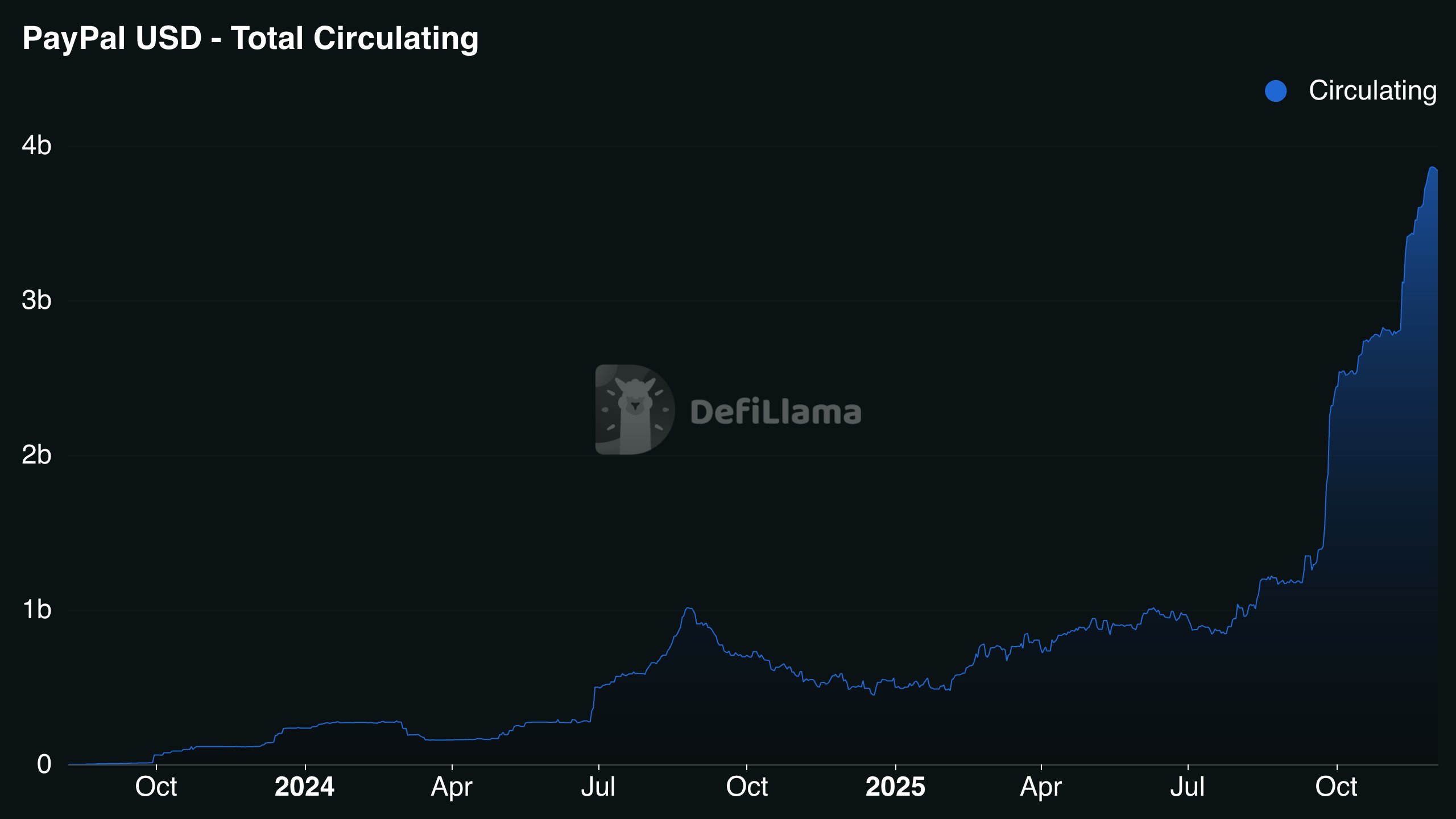
The trend in the supply of the PYUSD stablecoin | Source: DefiLlama on X
As displayed in the above chart, PayPal’s stablecoin had a supply of $1.2 billion in September, but today that figure has sharply gone up to $3.8 billion.
Bitcoin Price
At the time of writing, Bitcoin is trading around $92,800, up more than 7% over the last week.

The price of the coin seems to have shot up over the past day | Source: BTCUSDT on TradingView