

Wednesday 7 January 2026 – Galaxy, a leading financial firm, forecasts that crypto-backed loans are on track to hit $90 billion in Q4 2025, creating strong tailwinds for continued growth into 2026. As this lending expansion unfolds, Bitcoin Hyper (HYPER) – currently the fastest Bitcoin Layer-2 being developed – is positioning itself as the primary destination for institutional investors.
While many platforms push users to take exposure to volatile altcoins, Bitcoin Hyper lets institutions keep their collateral in the “hardest” asset available: Bitcoin. The ecosystem offers a distinct value proposition, preserving Bitcoin’s unmatched security while supplying a high-performance DeFi environment the base chain cannot support.
Importantly, this is not the sluggish, high-fee environment often associated with legacy DeFi chains like Ethereum. By using the Solana Virtual Machine (SVM), Bitcoin Hyper delivers Solana-grade transaction speeds and efficiency, finally giving Bitcoin the utility needed to lead the lending market.
Early investors have already put $30.2 million into the project’s early access stage to support development. However, within the next 24 hours the token price of HYPER, the project’s native token, will increase from its current value of $0.013545.
How Bitcoin Can Secure Its Place in the Lending Arena
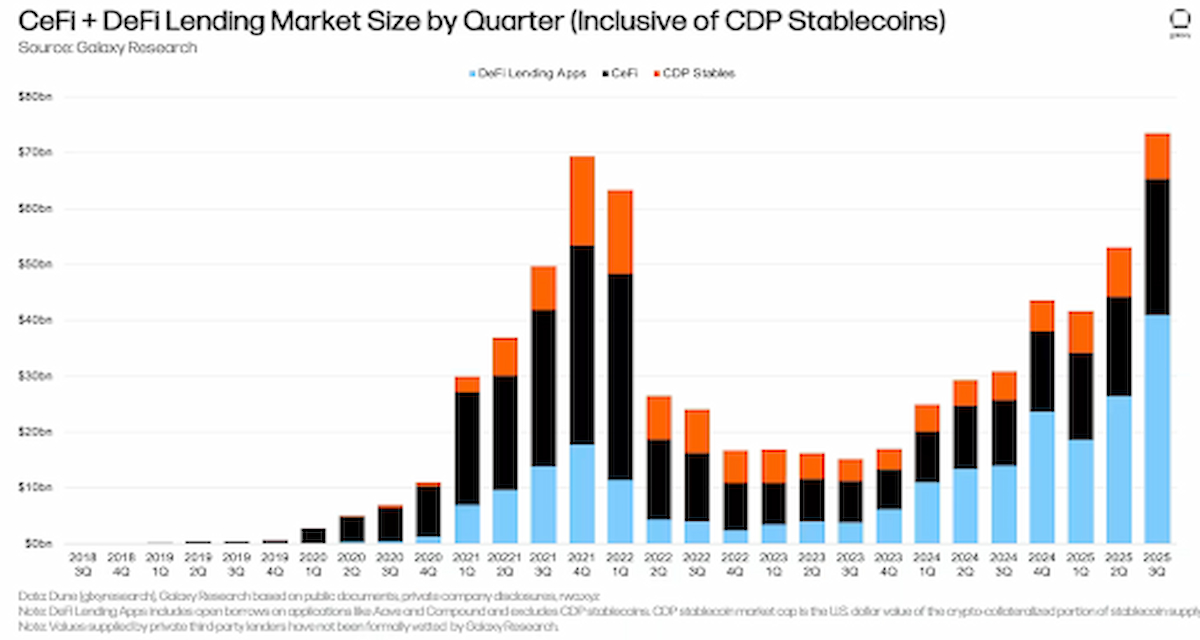
Galaxy Research says the crypto-collateralized lending market reached an all-time high of $73.59 billion in Q3 2025, a 38.5% increase in a single quarter. That momentum sets a clear path for total outstanding loans to exceed $90 billion by the end of Q4 2025.
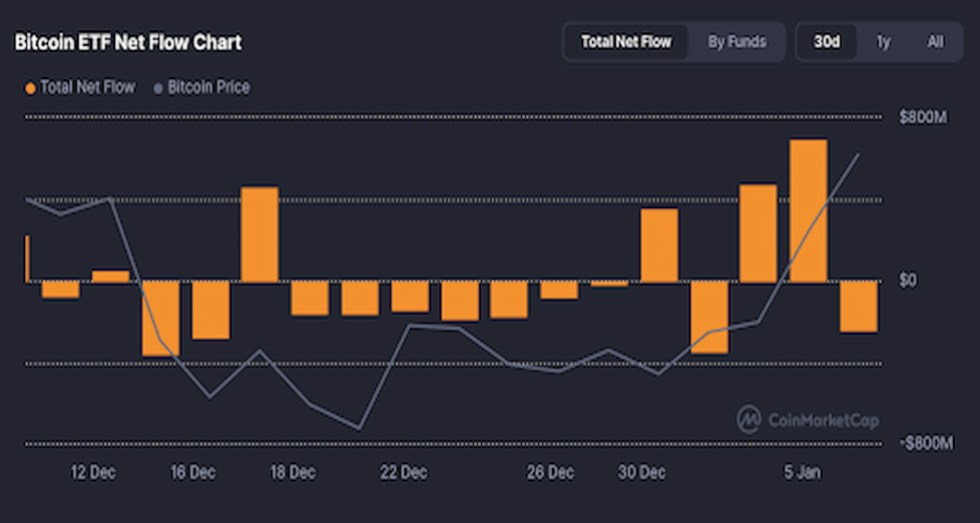
This surge lays the groundwork for what could be an even more transformative 2026. The year opened with renewed institutional interest, shown by $1.16 billion in spot Bitcoin ETF inflows in the first few trading days.
Projections indicate “on-chain dominance” – the share of loans coming from decentralized venues – will keep rising as institutions increasingly move toward DeFi protocols for lending and borrowing. That shift is mainly driven by a growing demand for transparency.

Source: https://www.galaxy.com/insights/research/predictions-2026-crypto-bitcoin-defi
After the high-profile collapses of several centralized CeFi lenders in recent years, DeFi has shown resilience. Centralized platforms went bankrupt because of opaque management, while DeFi protocols survived since their rules are hard-coded; they automatically liquidate under-collateralized positions to protect lenders without needing human intervention.
Today institutions value this 24/7 operational efficiency and the removal of middleman risk. Still, entering traditional DeFi poses major hurdles for large players, most notably liquidity depth.
If an institution needs to exit a $500 million position in a thin market, it faces slippage – execution so poor it materially erodes returns.
Moreover, much of DeFi today depends on “soft” assets or altcoins with flexible supply schedules and higher volatility. As Michael Saylor’s strategy illustrates, the hardest and most reliable asset remains Bitcoin. Yet Bitcoin’s base layer has long been too limited to support the complex, high-speed transactions modern DeFi requires.
Source: https://coinmarketcap.com/etf/bitcoin/
Other methods to use BTC as collateral exist, but they nearly always force a trade-off between security and performance. Bitcoin Hyper positions itself as the clear response to that problem. Combining Bitcoin’s unmatched security with Solana-level speeds, it offers the high-performance engine institutions demand.
In practice, Bitcoin Hyper acts as the Layer-2 infrastructure that gives institutional investors the confidence to enter the billion-dollar lending market without abandoning the industry’s premier asset.
Unlocking Bitcoin Liquidity for the Global Crypto Lending Market
Bitcoin Hyper is building an ecosystem where institutions can finally use Bitcoin as an active financial instrument rather than a static reserve. For years investors were mostly limited to HODLing; now Bitcoin Hyper brings full DeFi functionality to the asset. This is more than simply making Bitcoin programmable. Because the project uses the SVM, Bitcoin Hyper attains the lightning-fast execution previously exclusive to Solana-based dApps.
That high-performance layer enables sophisticated lending applications capable of unlocking the hundreds of billions in dormant Bitcoin liquidity, potentially fueling the $90 billion crypto lending market. For institutions the major breakthrough is being able to take part in these lending markets without losing BTC exposure.
But how is that done without repeating past risks?
It happens via a canonical bridge. When an investor moves Bitcoin to the Layer-2, the original BTC is locked on the base chain and a 1:1 equivalent is minted inside the Bitcoin Hyper ecosystem. This is fundamentally different from wrapping services like WBTC, which make you hand private keys to a central company such as BitGo.
Why HYPER Matters and How to Get It

Early investors in Bitcoin Hyper recognize that HYPER tokens could appreciate alongside Bitcoin’s growth in the lending space. As Bitcoin usage expands, demand for HYPER – used to pay Layer-2 fees, for staking, and for governance – should grow too.
Many investors see it as an early wager on Bitcoin gaining new utility and therefore higher demand via Bitcoin Hyper. To buy HYPER, go to the Bitcoin Hyper website and purchase with SOL, ETH, USDT, USDC, BNB, or even a credit card.
Bitcoin Hyper recommends Best Wallet, which is among the top crypto and Bitcoin wallets available.
HYPER already appears in Best Wallet’s “Upcoming Tokens” section, making it straightforward to buy, track, and claim when the token goes live. Join the Bitcoin Hyper community on Telegram and X to stay connected and follow the discussion.