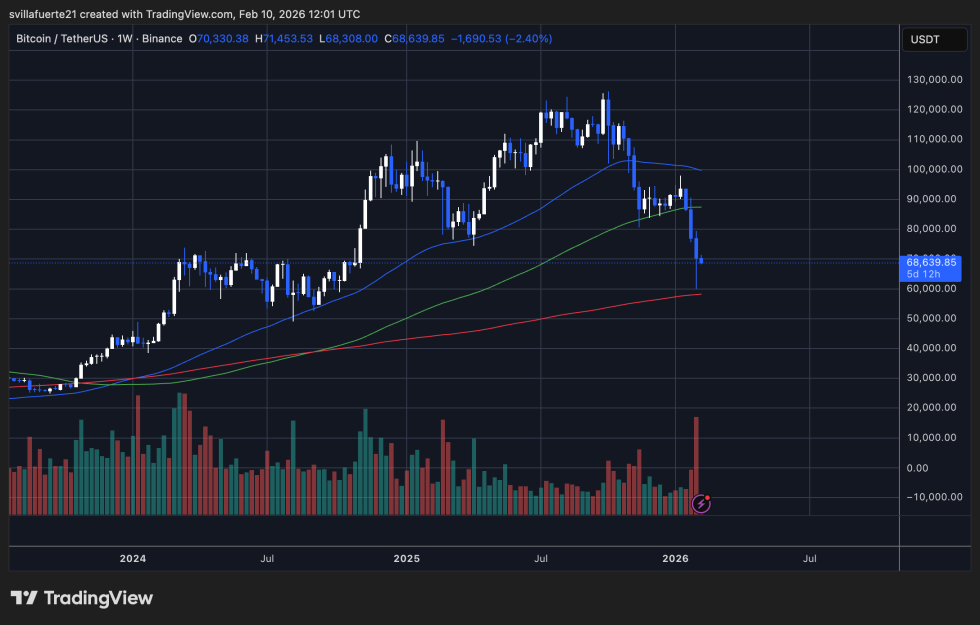

Bitcoin is struggling to reclaim key resistance levels as the broader market navigates a phase of heightened uncertainty and weakening demand. Despite multiple rebound attempts, price action remains constrained, reflecting a lack of sustained buying interest and fragile investor sentiment. According to a recent CryptoQuant report, a critical shift is occurring beneath the surface: new investor inflows have turned negative, suggesting that the ongoing sell-off is not being absorbed by fresh capital entering the market.
Data shows that cumulative 30-day flows have dropped to approximately −$2.6 billion, highlighting persistent capital outflows rather than accumulation. This dynamic contrasts sharply with typical bull-market corrections, where price dips tend to attract new participants seeking discounted entry points. Instead, current declines appear to be met with caution, reinforcing a defensive market posture.
The absence of the strong inflow spikes historically associated with sustained uptrends further underscores this shift. Liquidity conditions remain tight, and participation appears to be narrowing, with existing holders rotating positions rather than new investors driving demand. Until consistent inflows resume, upside momentum may remain limited, and Bitcoin could continue facing resistance pressure as the market searches for a clearer directional catalyst.
According to the report, Bitcoin’s current market behavior increasingly resembles the transitional phase that typically follows a cycle peak. In strong bull markets, price corrections tend to attract accelerating capital inflows, as investors view pullbacks as opportunities to accumulate. By contrast, early bear-market environments often show the opposite dynamic: weakening price action triggers capital withdrawal rather than fresh demand. Current on-chain readings suggest Bitcoin may be entering this latter phase.

Data indicates that marginal buyers — those who usually provide incremental liquidity during uptrends — are stepping back. As a result, price movements appear increasingly driven by internal capital rotation rather than genuine net inflows. This means existing participants are repositioning funds within the market instead of new investors entering, which typically reduces momentum and amplifies volatility.
Without renewed inflows, any upward price movement is more likely to represent corrective rebounds than sustainable trend reversals. This aligns with early bear-market conditions characterized by contracting liquidity, declining participation breadth, and cautious investor behavior. Historically, markets tend to remain fragile until new demand returns consistently.
The absence of strong inflows suggests that Bitcoin’s recovery potential may remain constrained, with price action likely dependent on whether fresh capital eventually re-enters the ecosystem.