



If you want a crypto platform that treats safety as a priority and explains its tools without confusion, the Gemini Exchange is one of the first names to consider. This updated look at the Gemini crypto exchange shows what the platform offers in 2025, including its fees, security controls, and daily investing features. Gemini has operated since 2014, built by Cameron and Tyler Winklevoss, and holds a licence from the New York State Department of Financial Services.
It supports more than 70 countries, over 160 cryptocurrencies, and more than 300 trading pairs. You can choose the simple buy interface or switch to ActiveTrader for advanced charting and deeper order control. Gemini also maintains strict security standards and strong compliance for U.S. users.
What is Gemini?
Gemini Exchange delivers a regulated trading environment built around clarity, reliability, and user protection. The Gemini crypto exchange keeps compliance and security at the core of every feature, which gives the platform a steady and predictable feel in real use.
Gemini operates under the New York State Department of Financial Services and follows a strict security model supported by recognised certifications. This approach carries through everything, from the simple buy interface to the advanced ActiveTrader setup.

Users can make quick purchases through the Basic view or switch to ActiveTrader for deeper charting and stronger order control. The ecosystem includes the Gemini Wallet, Nifty Gateway for selected NFTs, Cryptopedia for education, and a crypto rewards credit card. Staking and earn options exist on a limited set of assets, consistent with Gemini’s risk-aware model.
Instead of chasing the lowest fees or the widest altcoin catalogue, Gemini focuses on verified markets and controlled access to more than 160 assets. Real-time data and strong security make it appealing for users who want stability over speculation.
Who Gemini Is Built For
Gemini is a strong option for newcomers who want an easy interface, reliable mobile apps, and safety tools that reduce early mistakes. It creates a smooth learning path without overwhelming users.
For institutions and serious traders, Gemini offers strict regulation, clean account separation, and stable reporting features. ActiveTrader provides fast execution on major pairs and a dependable API for users who need accurate order handling.
It may not satisfy high-volume traders or users chasing broad staking options in the U.S., but it performs well for anyone who prefers regulated markets, verified assets, and a platform that stands up to close examination.
Pros and Cons of Gemini Exchange
From our experience, Gemini is one of the safest and most compliance-focused platforms in the crypto market. Its New York trust charter, SOC 2 and ISO certifications, and heavy reliance on cold storage give it a stronger security profile than many competitors. The Gemini Exchange also offers a clean interface for beginners, a powerful ActiveTrader setup for advanced users, and stable API access for automation. Mobile apps perform well, the crypto rewards credit card integrates smoothly into the ecosystem, and institutions continue to rely on Gemini’s custody services. Since 2022, there have been no reported cold-storage breaches, which reinforces the platform’s security reputation.
There are trade-offs. Retail trading fees on the Basic interface are higher than most users expect, and card-based deposits can reach up to 3.49 %. Earn and staking services take a platform share of up to 15 %, which reduces overall yield. Customer support can be slow during busy periods. U.S. users cannot access derivatives, and the curated asset list is more selective than what you find on broader exchanges. While the Earn dispute was fully resolved with customer repayment, it still serves as a reminder that yield products come with additional risks.
If your priority is top-tier security, strong compliance, and a stable trading experience, Gemini is a solid choice. If low fees, aggressive staking rewards, or high leverage instruments matter more to you, then comparing alternatives like BTCC or dedicated staking platforms is worth your time.
Pros
✔ Operates as a regulated New York trust under NYDFS oversight
✔ Strong independent audits, including SOC 2 Type II and ISO 27001
✔ Around 95 percent of customer assets held in cold storage
✔ Proof of reserves available for transparency
✔ Clean, beginner friendly Basic interface
✔ Advanced ActiveTrader layout with TradingView charts
✔ Stable and well documented API for programmatic trading
✔ Highly rated iOS and Android apps with fast performance
✔ Crypto rewards credit card with instant payouts
✔ Integrated NFT access through Nifty Gateway
✔ Trusted by institutions for custody with no cold storage breaches since 2022
✔ Clear repayment history for users affected by Earn, reflecting accountability
Cons
✖ Higher retail fees on the Basic interface
✖ Card deposits can cost up to 3.49 percent
✖ Earn and staking programs may take up to 15 percent of the yield
✖ Slower customer support during peak periods
✖ No derivatives trading for U.S. users
If you trade frequently throughout the day and need faster execution or lower taker fees, our breakdown of the best exchanges for day trading can help you find a platform more suited to high-frequency workflows.
Is Gemini a Secure Place to Trade Crypto
As one of the best crypto exchanges at the moment, security is the area where the Gemini Exchange genuinely stands out.
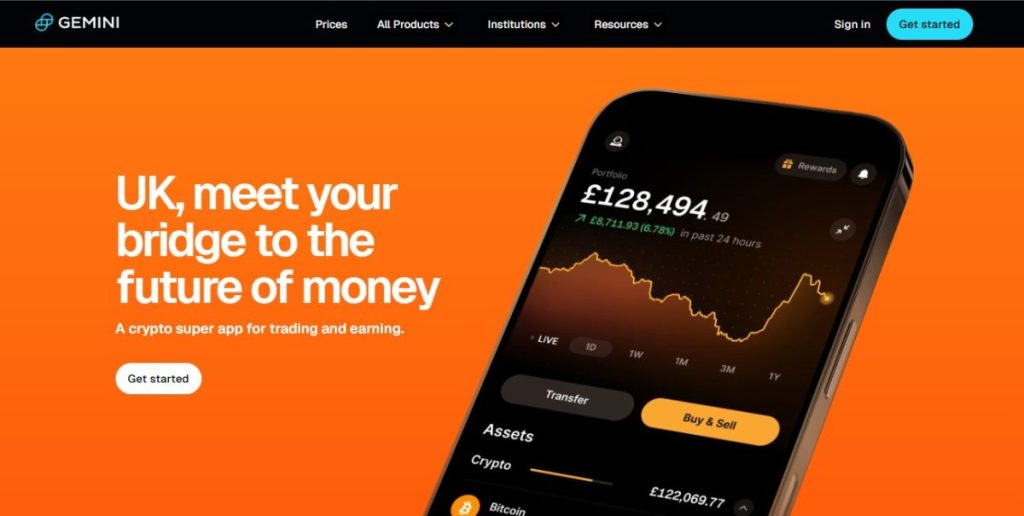 When we tested the platform, it became clear that the Gemini crypto exchange is built with the same mindset you see in regulated financial institutions. Independent certifications like SOC 2 and ISO 27001 back that up. Most user assets stay in cold storage, and every account is locked behind mandatory 2FA. Nothing here feels like a shortcut or a marketing claim. It feels like a system designed by people who understand real risk.
Regulatory Oversight and Licensing Status
From our review, the biggest trust factor is Gemini’s New York Trust charter. Being supervised by the New York State Department of Financial Services means the exchange follows strict capital rules, ongoing audits, and compliance checks in all 50 states. This structure forces them to maintain standards many other exchanges simply do not face.
We also followed the developments around the Earn program. Gemini resolved those issues and committed to repaying customers, which shows the company is willing to handle problems directly instead of ignoring them. It matters when you are trusting a platform with your money.
We have seen how Gemini maintains recurring SOC 2 audits and keeps its ISO 27001 certification updated. These independent reviews confirm that incident response, operational controls, and governance are handled to a professional standard. NYDFS oversight adds another layer that most global exchanges cannot match.
Fund Segregation and Custody Protections
During our testing, it was clear that Gemini separates user funds from company operating funds. About 95% of assets remain in cold storage, which reduces risk dramatically. Hot wallets are insured, and Gemini provides proof of reserves so you can verify balances. This level of transparency is something we want from any exchange we use.
Role-based access limits how staff can interact with custody systems. Internal reviews happen regularly, and every movement of assets follows documented procedures. It is a structured custody model, not something improvised.
Password, 2FA, and Device Security
From a user perspective, account-level protection feels strong. Gemini requires 2FA from the start, and you can whitelist withdrawal addresses or use hardware keys to upgrade security even further. The platform flags unusual login activity quickly, and we saw alerts pop up instantly when we tested access from different devices.
Your data is encrypted in storage and during transfer. Gemini performs consistent security testing, and we have seen how quickly you can revoke device access if anything goes wrong on your end.
Security Overview Table
Our long-term observation is that Gemini has kept customer funds secure. A data exposure issue in 2022 pushed them to tighten their systems, and today the platform reports a drop of more than 98% in similar incidents. Cold storage has not been compromised.
If you hold larger balances, our recommendation is to split assets between the Gemini Exchange and a personal wallet. Combine that with 2FA, address whitelisting, and basic device safety, and your overall risk becomes much lower.
Gemini Fees
Gemini’s fees vary depending on how you trade, which interface you use, and how you fund your account. In our testing on the Gemini Exchange, costs can differ sharply between the Basic buy interface and ActiveTrader, so knowing each fee type helps you avoid unnecessary charges.
The Basic interface is the most expensive way to trade. Small purchases come with a minimum fee of 0.99 dollars, which often pushes the effective rate close to 1.49 percent or higher. If you rely on card payments such as debit cards, Apple Pay, or Google Pay, the total cost can reach up to 3.49 percent. These fees make small, frequent purchases noticeably more expensive.
Bank transfers via ACH are free and remain the cheapest way to fund your account. However, when you buy or sell crypto on the Basic interface, Gemini still applies its 1.49 percent trading commission, so the deposit method does not eliminate the trading cost.
ActiveTrader is far cheaper than the Basic interface. It uses a maker-taker system, starting at 0.10 percent for maker orders and 0.20 percent for taker orders. Fees drop once you hit certain 30-day trading volume thresholds. This structure is much more cost-efficient for anyone placing regular or larger trades. Even so, some competitors still come in lower. Platforms like BTCC, Binance, and OKX offer 0.1 percent per trade or less, which undercuts Gemini for high-frequency strategies.
Withdrawal fees on the Gemini crypto exchange vary by token and network conditions. Before moving funds, it is worth checking the current cost per asset. Users who participate in Earn or staking programs should also account for Gemini’s platform share, which can be up to 15 percent of rewards and reduces the real yield you take home.
Below is a simplified view of how Gemini’s pricing works across major products.
Gemini Wallet Overview
In our experience with the Gemini Exchange, the wallet setup strikes a good balance between fast access and solid protection.
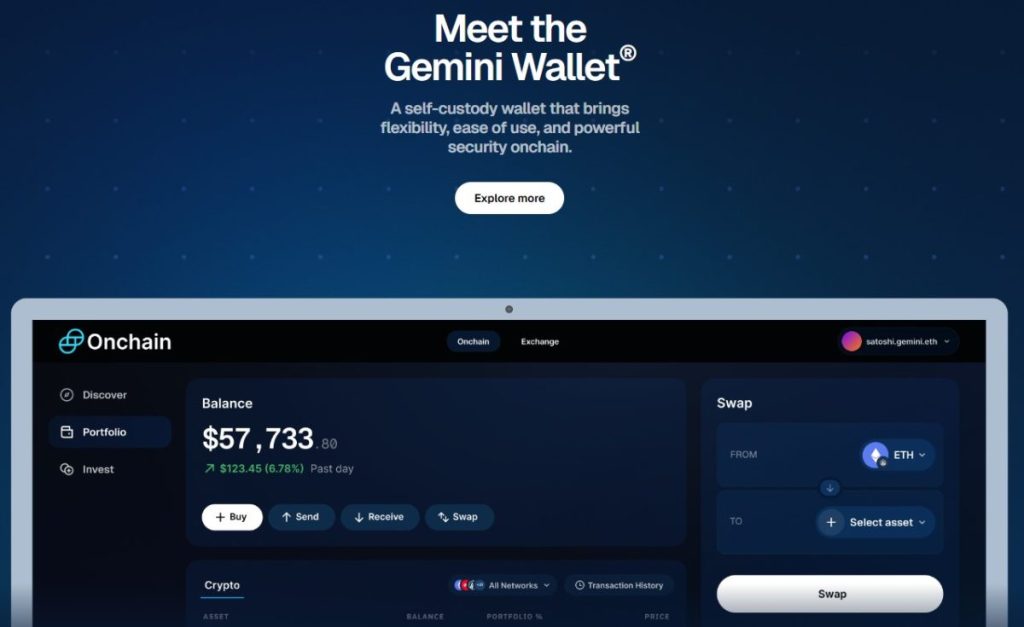 The on-exchange wallet lets you move funds quickly for day-to-day trading, while Gemini custody adds a higher security layer when you need long-term storage. The layout is simple to use, and the controls feel predictable, which is something we value when handling real balances.
Most assets remain in Gemini cold storage. That means hardware security modules, multi-signature approval, and insurance on online balances. You can also verify your holdings through proof of reserves, which gives you a clean overview of what is backed. If you prefer holding long-term positions yourself, you can connect a hardware wallet and keep your keys offline.
Storage Model and Supported Assets
From our testing, the hot wallet covers quick trades and withdrawals without forcing you to move coins back and forth. The bulk of customer assets stays offline, and safety tools like address whitelisting, approval controls, and mandatory 2FA help prevent mistakes and block unauthorized withdrawals.
The Gemini crypto exchange supports more than 160 assets, including Bitcoin, Ethereum, Solana, Cardano, and the GUSD stablecoin. Availability can change depending on your location, but the wallet generally reflects what the exchange offers in each region. It keeps the experience consistent without overwhelming users.
Gemini Wallet Feature Table
Setting Up Your Gemini Account
 Getting started on the Gemini Exchange is simple if you follow a clear process. From our own experience, the setup flows smoothly as long as you prepare the basics and take security seriously from the start. If you want to start investing in cryptocurrencies, Gemini is a perfect tool for that.
Step 1: Prepare Your Details
Have your government ID ready and keep your phone nearby for verification codes. Think ahead about the payment method you plan to use and the security settings you want to activate later. Starting with the right tools on hand will make the process faster.
Step 2: Create Your Gemini Account
Visit the official Gemini site or app and open an account using your real name, email address, and a strong password. After confirming your email, add your phone number so you can receive login codes and important account alerts.
Step 3: Complete Gemini KYC
Gemini requires identity verification before you can trade. Provide the details shown on your ID, upload a clear photo of the document, and take a quick selfie for matching. In our experience, the approval process is usually swift.
Step 4: Secure Your Account
Once the account is active, turn on 2FA through an authenticator app. If your device supports passkeys or a hardware security key, enable those features as well. Whitelisting withdrawal addresses adds another layer of protection. It also helps to review the list of devices logged into your account and remove anything unfamiliar.
Step 5: Fund Your Gemini Account
After verification, you can fund your account through ACH for low-cost transfers or bank wires for larger deposits. Debit cards, Apple Pay, and Google Pay work too, although fees are higher. If you prefer depositing crypto, generate the proper wallet address from Gemini and send a small test amount before moving larger funds.
Step 6: Place Your First Trades
Once your balance appears, you can start trading. The basic buy interface keeps things straightforward, while ActiveTrader offers charting tools and more precise order control. Many beginners place a small order first just to get comfortable, then move to limit orders or recurring buys as their strategy develops.
Step 7: Organise Your Long-Term Setup
It is smart to separate trading funds from long-term holdings. Keep short-term balances on the Gemini Exchange for convenience and move long-term positions to a hardware wallet where you control the keys. Turn on Gemini’s tax reports and summaries to keep everything organised. Revisit your fees, security settings, and funding preferences regularly so your setup stays efficient and secure.
Gemini API Guide
From our own work with the Gemini Exchange, the API is one of the platform’s strongest advantages. It is fast, reliable, and built in a way that feels practical for real trading, not just basic integrations. Orders on major pairs hit the engine within milliseconds, which makes a noticeable difference if you run strategies that react to price changes. The API ties directly into ActiveTrader, so you get consistent behavior whether you trade manually or through code. It also supports automated strategies, TradingView-triggered execution, and detailed market depth queries, letting you focus on refining your models instead of clicking through menus.
Use Cases for Developers and Traders
We have seen everything from small developer scripts to full quant setups running on the Gemini crypto exchange API. Quant desks use it to manage inventory, tighten spreads, and watch multiple order books at once. Independent traders use it to automate stop entries, build timed strategies, or run volatility screens that execute instantly without hesitation. Larger funds rely on it for scheduled rebalancing and exposure management when volume shifts.
Market making is a common use case, and the API gives you the speed and stability needed to update both sides of the book without lag.
Signal-driven execution works well too, especially when tied to TradingView alerts, letting you react faster than manual trading ever could.
Rebalancing with the API removes delay and emotional bias, allowing your allocation rules to run cleanly.
Monitoring tools make it easy to watch several markets, compare execution costs, and route orders efficiently.
Before you move anything into production, tighten your security setup. Limit API permissions, whitelist IPs, enforce strong 2FA, and make sure withdrawal allowlists are active. Reviewing logs and rotating keys is part of responsible API maintenance, especially if multiple people share access.
Gemini API Capability Table
We strongly recommend starting in the sandbox. It is stable enough to simulate real flow and gives you a chance to test how your code handles errors, retries, and failovers. Once your system behaves consistently, moving to production feels much smoother. When the setup is done right, the Gemini API becomes a dependable engine for automation, systematic trading, and data-driven strategies at scale.
Customer Support Experience
Based on our direct experience with the Gemini Exchange, the support system works best when you use the self-service tools first, then escalate to a ticket only when the issue genuinely requires human intervention. The help center, Cryptopedia, and the platform’s tutorials cover most routine problems. They are clear, accurate, and usually enough to solve everyday questions without waiting for a response.
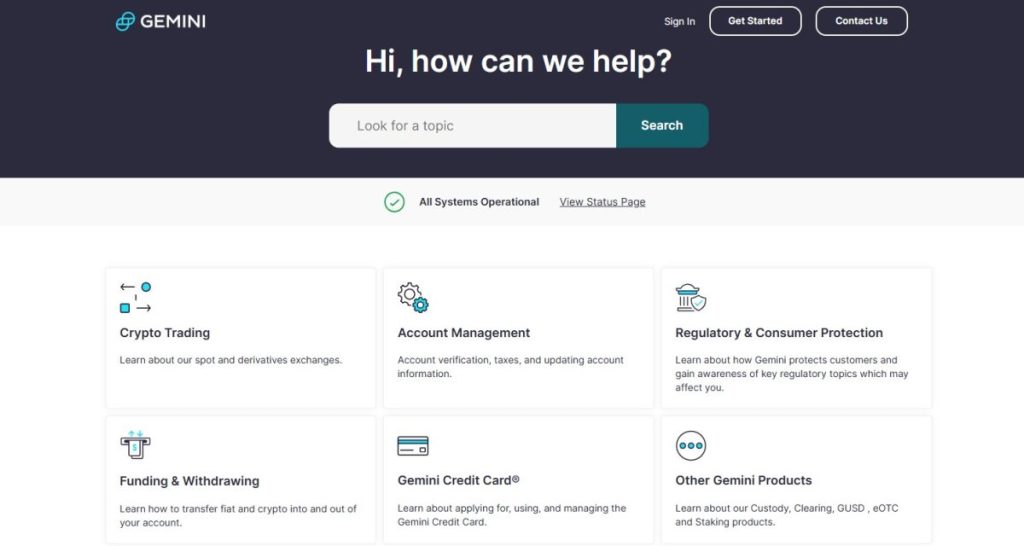 When we tested more sensitive scenarios, such as identity verification checks, locked withdrawals, or account access issues, the process took longer. This is normal for a regulated exchange, and Gemini follows strict internal procedures before approving anything that touches user identity or funds. The result is stronger oversight, although it also means you need some patience during busy periods.
Compliance, Risk Management, and User Protection Tools
From what we have seen over years of using the Gemini Exchange, this is the part of the platform where the company is most consistent. Gemini operates as a New York trust company under NYDFS oversight, and that structure forces it to follow rules that look a lot more like banking than a typical crypto exchange. Everything from onboarding to withdrawals is shaped by those regulatory requirements, and it shows in how tightly the system is managed.
Independent audits are a big part of that foundation. Gemini keeps active SOC 2 Type II and ISO 27001 certifications, and those reviews confirm that the platform handles operational risk, incident response, and internal processes to a professional standard. Only a small number of exchanges carry both certifications, and the difference is noticeable once you start testing the platform at scale.
Cold storage is where Gemini puts most of its focus. Roughly 95 percent of customer assets stay offline, protected with hardware security modules and multi-signature controls. Funds are fully segregated from company assets, and online balances are insured. Combine that with proof of reserves reporting and you get a clear view of what is held on the platform at any given time.
At the account level, Gemini’s security controls are some of the best we have used on a regulated exchange. You can enable 2FA, passkeys, hardware keys, withdrawal whitelists, and full device tracking. In our testing, these tools consistently blocked common attack vectors, and the platform’s real-time monitoring flagged unusual behavior immediately.
If you plan to stay on the platform long term, it is worth taking advantage of these deeper controls. Use withdrawal whitelists, add delays for high-value transfers, remove devices you no longer use, and rotate your security keys regularly. Gemini also recommends using a hardware wallet for storing larger balances, and we agree. The combination works well, especially if you trade often but still want to keep most of your holdings isolated from the exchange.
Compliance and Risk Management Overview
After comparing our own results with reputable external sources, it is clear that Gemini is one of the most compliance-driven exchanges in the United States. The mix of strict oversight, strong custody practices, and independent auditing gives it a safer profile than most platforms in the same category.
There is one important limitation. Gemini is fully custodial, meaning you do not control your own private keys while assets sit on the exchange. That is normal for regulated platforms, but it is something every user should understand. The best setup pairs Gemini for day to day trading with a hardware wallet for long-term storage, which keeps convenience and security in balance.
Product and Feature Catalog
From our experience with the Gemini Exchange, the platform offers a well-rounded set of tools built for trading, earning, and everyday payments. The Gemini crypto exchange keeps the layout clean, and most features integrate smoothly with each other, which makes the system easy to navigate even when you use several products at once.
Advanced Trading and Futures Leverage
ActiveTrader is the core of Gemini’s advanced trading setup. You get TradingView charts, deep liquidity on major pairs, and professional order types like limit, stop, stop limit, and fill or kill. Execution is quick, and the API ties directly into this engine, which is helpful if you automate parts of your strategy.
Outside the United States, Gemini offers perpetual futures with leverage of up to 100 times. These contracts run through ActiveTrader and are aimed at experienced traders who understand the risks. U.S. customers cannot access derivatives, but they still benefit from full spot markets, charting tools, and analytics.
Gemini Credit Card Overview
The Gemini credit card adds a simple way to earn crypto rewards on everyday spending. There is no annual fee, and rewards are credited instantly at the point of sale. In our testing, the seamless delivery of rewards made it more practical than cards that batch rewards monthly.
It fits neatly into the broader Gemini ecosystem, since spending feeds directly into your portfolio without any extra conversions or steps. It is a good option for users who want to grow their holdings through regular purchases.
Automated Recurring Purchases
Gemini supports recurring buys on the Basic interface. You choose the asset, how often you want to purchase it, and the amount. Once set, the plan runs automatically on desktop or mobile. It is a straightforward way to average into the market over time.
The mobile interface is designed for quick adjustments. You can pause or change your schedule easily, and the voice command integration keeps the process simple if you want hands-free navigation.
Earn and Staking Opportunities
Gemini Earn provides yield on select assets, depending on where you live.
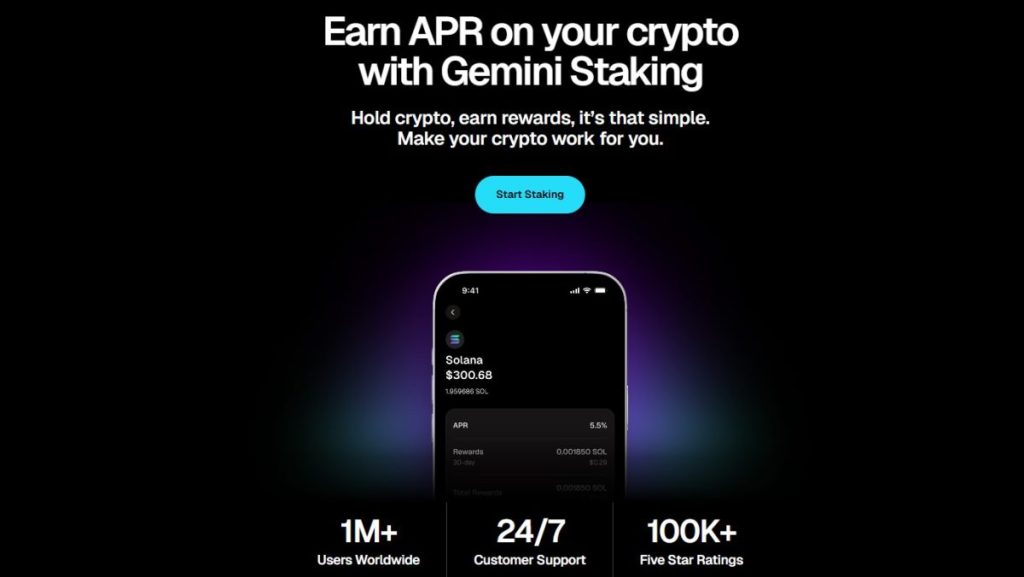 Historically, the program supported a wide range of coins and collected up to a 15 % share of rewards as a service fee. Availability varies by jurisdiction, and products change as regulations evolve.
All customers affected by the Genesis event were fully paid back by 2024. That outcome underlines both the risk of yield programs and the importance of choosing platforms that take responsibility when issues arise. Before joining any Earn or staking program, check current rates, lockup rules, and your local eligibility.
Platform Breakdown
Through our hands-on testing of the Gemini Exchange, we found that the platform’s layout and tools are designed to keep trading efficient on both desktop and mobile. Each interface choice serves a purpose, making it easier to stay focused whether you are placing quick orders or running deeper analysis. The experience is consistent across devices, which helps when you switch between screens throughout the day.
Interface and Design
Gemini offers two main layouts: the Basic interface and ActiveTrader. The Basic layout is built for fast, uncomplicated transactions. It presents clear buy and sell options, up-to-date balances, and simple price displays. When we used it for quick orders, it stayed clean and responsive without distracting elements.
ActiveTrader is a different experience entirely. You get advanced TradingView charts, depth tools, hotkeys, and a full range of professional order types. The layout adapts smoothly as you shift between markets, and you can monitor multiple charts without feeling overwhelmed. For active users, this design reduces decision time and keeps the workflow tight.
Across both layouts, Gemini keeps key actions easy to reach. Switching devices or themes does not change the core navigation, which makes the platform feel familiar no matter how you access it.
User Friendliness
Gemini’s mobile apps are some of the better-designed apps we have used in the crypto category. They run smoothly on iOS and Android, with strong security locks and timely alerts. Voice commands make checking prices simple during fast markets.
The app mirrors the desktop experience closely, so you never feel like you are trading on a stripped-down version of the platform. AR balance views are an optional extra, giving you a more interactive way to check your holdings if you want it.
Asset Selection
The Gemini crypto exchange supports more than 160 assets, including Bitcoin, Ethereum, and a wide range of other established names. Trading volume is strongest on major pairs, which keeps execution consistent during busy periods.
If you are interested in digital collectibles, Nifty Gateway integrates directly with your Gemini account. It gives you access to curated NFTs without needing separate logins or wallets.
Pricing Structure
Gemini’s pricing varies based on how you trade. On the Basic interface, smaller purchases trigger fees between 0.99 and 1.49 percent per trade, and card deposits can reach up to 3.49 percent. ActiveTrader uses a maker-taker model with lower base fees that decrease as your 30-day volume grows. Some earning programs may keep up to 15 percent of the rewards, so it pays to review the terms before joining.
If you trade with leverage or focus on low-cost execution, our guide to the best exchanges for margin trading offers a clearer comparison of platforms built for high-volume strategies. Your choice between Basic and ActiveTrader should match how often you trade and how much flexibility you need in the markets you follow.
Conclusion
In our 2025 review, the Gemini Exchange stands out as a security-first, regulation-driven platform. It operates under NYDFS oversight, maintains SOC 2 and ISO certifications, publishes proof of reserves, and keeps about 95 percent of assets in cold storage. Since 2022, security incidents have dropped sharply, with no breaches in offline custody.
Costs remain simple but not the lowest. ActiveTrader offers tiered pricing, bank transfers help avoid the 3.49 percent card fee, and certain yield products include a 15 percent platform share. U.S. users cannot trade derivatives, while international users may access futures with leverage depending on their region.
Gemini works best for beginners, cautious investors, and institutions that value governance and safe custody. High-volume traders focused on ultra-low fees may prefer other platforms, but Gemini delivers consistent performance, reliable APIs, and a clean user experience.
If you prioritise strong compliance and safety over rock bottom pricing, Gemini is a solid addition to your 2025 crypto plan.
<p style=”text-align: center;”><a style=”padding: 14px 28px; font-size: 16px; font-weight: bold; color: #ffffff; background-color: #0e2ef8; border-radius: 6px; text-decoration: none;” href=”https://bs_a357fe9c.bitcoinist.care/” target=”_blank” rel=”nofollow noopener”>Visit Gemini now!</a></p>
FAQ
What is Gemini and where does it operate in 2025?
Gemini, founded by Cameron and Tyler Winklevoss in 2014, is a U.S. crypto exchange. It’s licensed in New York and works in all 50 states and over 70 countries. It offers trading of more than 160 cryptocurrencies.
How do the Basic platform and ActiveTrader differ?
The Basic interface suits beginners, offering quick buys and educational content. ActiveTrader is for pros, providing advanced features and quicker trades. It’s the better choice for lower fees and in-depth tools.
Is Gemini safe to use?
Yes, Gemini is very secure, with top certifications and most assets stored offline. It also offers insurance and several ways to protect your account. This makes it a safe place for your crypto.
What happened in the 2022 security incident?
Due to a third-party breach, some user contacts were exposed, but no crypto was lost. Since then, Gemini cut down incidents significantly and stepped up its security game.
How is Gemini regulated?
NYDFS regulates Gemini, ensuring it meets strict standards. It resolved major issues by 2024, including a large settlement and full customer reimbursements.
