

Bitcoin is entering a decisive moment as selling pressure intensifies and uncertainty continues to grip the market. Bulls are struggling to reclaim higher levels, and each failed rebound reinforces the prevailing downtrend. With momentum weakening across spot and derivatives markets, investors are increasingly questioning whether BTC can stabilize before more serious structural damage occurs.
According to a report by Darkfost, the situation is especially difficult for short-term participants. With a realized price of $113,692, the BTC 1–3 month cohort is now experiencing the largest percentage loss of this entire cycle.
This analysis focuses exclusively on the spot market, isolating a group of investors known for more speculative behavior and faster reaction times. Because these holders typically enter during strong momentum phases, their capitulation or continued holding often signals pivotal shifts in market structure.
The deep losses within this cohort reveal how aggressively the market has reversed and underscore the mounting pressure on shorter-term players. As Bitcoin approaches critical support levels, the behavior of these investors may determine whether the current correction stabilizes — or accelerates into a broader downturn.
Short-Term Holder Capitulation Often Signals Bottom Formation
Darkfost highlights that the 1–3 month Bitcoin holder cohort has now spent nearly two weeks sitting on average unrealized losses between 20% and 25%. Historically, this type of drawdown among short-term participants has tended to occur near cyclical bottom formation.
These traders typically react quickly to volatility, and when their losses reach this depth, they are pushed into a critical decision point: sell and exit the market, or hold and endure further downside.
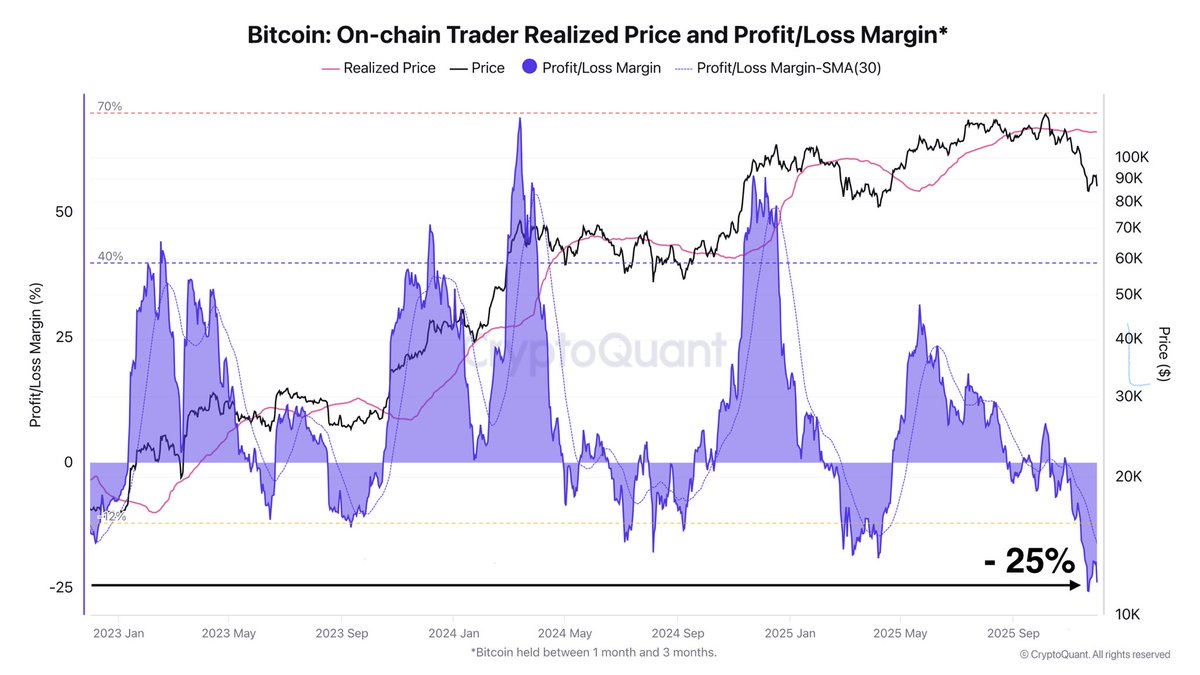
Throughout this cycle, similar phases of elevated losses have preceded major inflection points. Once a large portion of these speculative holders capitulates — a process that appears to have been unfolding in recent weeks — selling pressure usually begins to exhaust. This shift often creates an environment where accumulation becomes far more attractive for patient investors who track sentiment and realized-price dynamics.
However, Darkfost emphasizes that this pattern only holds if the long-term bullish trend remains intact. Structural on-chain indicators, broader demand trends, and long-horizon holder behavior continue to support the idea that Bitcoin’s macro trend has not been invalidated.
While volatility may persist in the short term, the alignment of capitulation signals with a still-intact long-term structure suggests that current levels could become an opportunity for strategic accumulation.
Bitcoin Tests Weekly Level as Market Searches for Higher-Timeframe Support
Bitcoin’s weekly chart shows the most significant corrective phase since the early stages of the cycle, with price falling sharply from the $120,000 region and now attempting to stabilize around the 100 SMA near $84,000–$85,000. This moving average has historically acted as a major structural support during bull markets, and BTC’s current interaction with it marks a critical juncture for the broader trend.
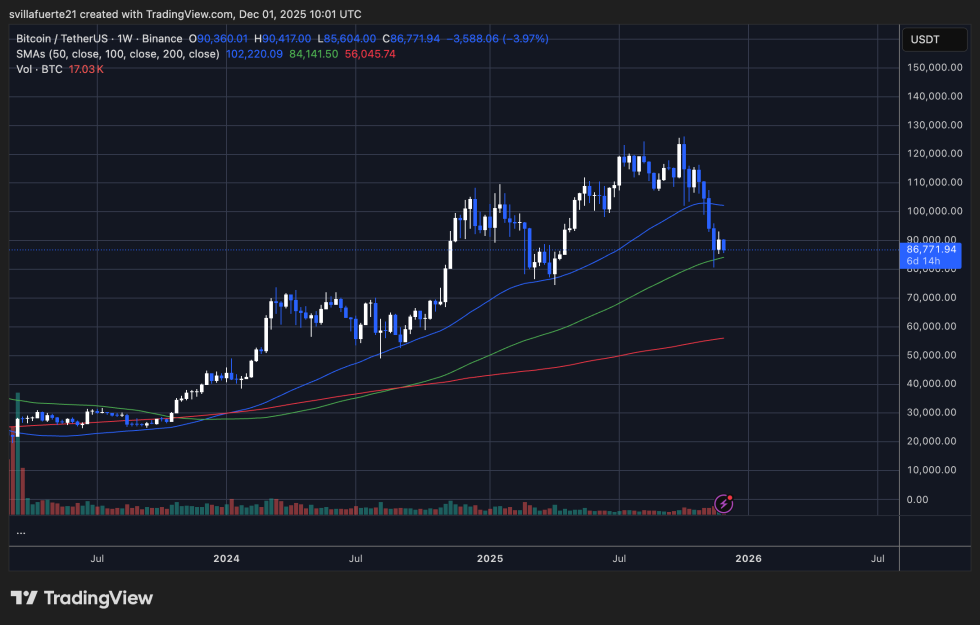
The breakdown below the 50 SMA was a clear sign of weakening momentum, signaling that sellers have gained control of the higher-timeframe structure. However, the wick formed beneath the 100 SMA suggests that buyers are beginning to step in, attempting to defend this crucial zone. The reaction so far is constructive but not yet decisive — BTC needs a stronger weekly close above $90,000 to confirm stability.
Volume has increased during the decline, indicating forced selling and capitulation rather than organic trend reversal. Historically, pullbacks into the 100 SMA often precede medium-term bottoms within a long-term bullish market, but continuation depends on whether BTC can avoid a sustained weekly close below this level.
Featured image from ChatGPT, chart from TradingView.com