

A recent Vanity Fair piece painted a cartoonish profile of what they called “crypto’s true believers”, framing long‑time participants as cultish die‑hards who won’t admit the dream is over.
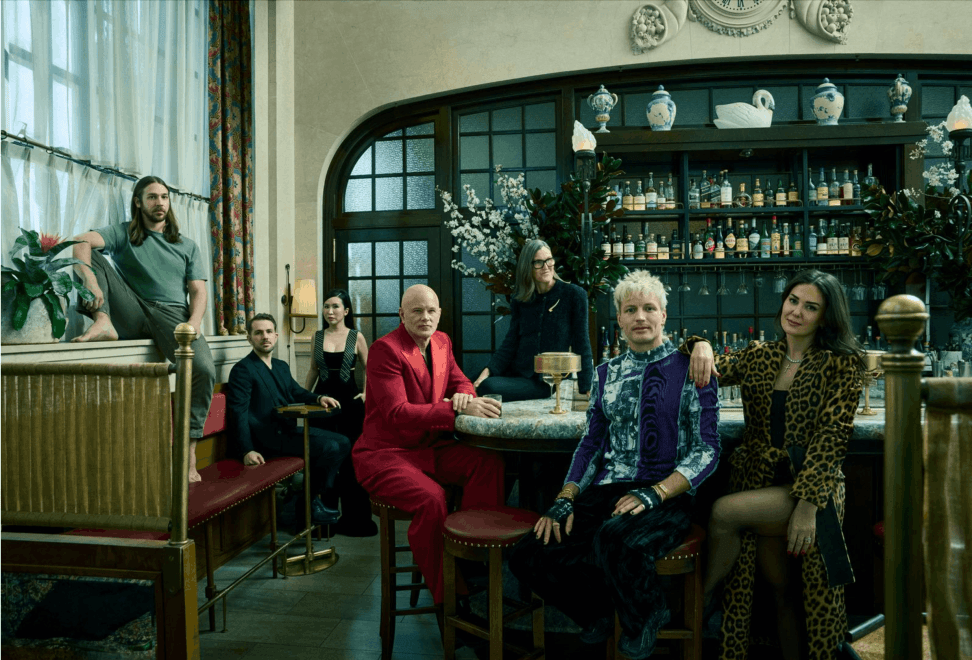
The original caption on the cover picture o the article reads “the most expensive religion on the world”. Source. Vanity Fair.
Crypto: “The Most Expensive Religion In The World”
Dim lights, deep contrast shadows, rich jewel tones, animal print, bright colored suits and a decadentism-old money aesthetic. That’s the depiction of Vanity Fair’s “Crypto’s True Believers”: a group of overdue-old Hollywood ingenuos people that refuse to accept that they have fallen out of grace. A festival of banality and naivety led by capricious people throwing a “tantrum” after living a maximalist-multimillionaire lifestyle that would make Jay Gatsby and Daisy Buchanan blush.
Related Reading: Crypto Donations Branded ‘Dangerous’? UK Security Panel Urges Immediate Ban
Even worse: the “zealots who are holding the line”, as the hit piece calls them, are condescendingly framed as cult members in a way that would make Vitalik Buterin, Ethereum’s co-founder, raise his arms in desperation: this portrayal, the entire piece, is everything that he has been tirelessly warning against — a fact that the article itself, without any sense of self-awareness, is gracious enough to acknowledge.
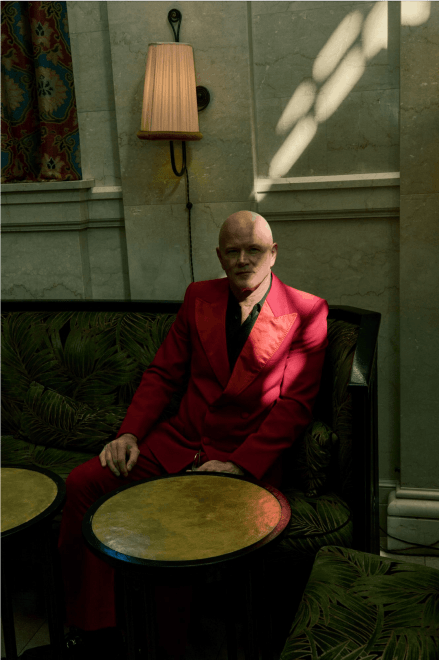
Michael Novogratz, CEO of Galaxy Digital, is made to look like some sort of Wilson Fisk, Daredevil’s Kingpin. Source. Vanity Fair.
As if the pictures weren’t enough, the captions take matters to the next level: from “the bitcoin playboy” and “the couture evangelist” to “the build-a-bear and the product mommy”: the followers of the “sixth asset class” are the successors of Satoshi Nakamoto’s original “hyper online” followers.
Despite acknowledging that the implosion of Lehman Brothers took with it “the myth of institutional security” for the entire world, Vanity Fair depicts the “early believers” of Bitcoin’s White Paper as “cypherpunks on message boards, creating their own echo chamber and convinced that cryptography could do what regulators never would: redistribute power”. A cyberpunk caricature of a rightfully disillusioned generation looking for a different way to rebuild a world that had just collapsed on top of them, crushing their dreams and ambitions with it.
The article positions itself as the “serious” view of crypto from the traditional media bubble, implicitly antagonizing and directly mocking the plead of the subjects they depict to be taken seriously: what could be serious about them, the degen-extravaganza champions? Why would anyone still care about the crashes, frauds, and regulatory crackdowns of this out of touch group of crypto aristocracy?
Devin Finzer cited unfavorable market conditions as the reason for the delay of $SEA yet flaunted this kind of lifestyle in the Vanity Fair article titled “Crypto’s True Believers Demand to Be Taken Seriously” that released on the same day
We are not a serious industry 😭 pic.twitter.com/olXPf6itgb
— JBond (@jbondwagon) March 18, 2026
The Community Takes A Rightful Stand
For obvious reasons, the piece triggered immediate backlash on social media X from builders, founders and on‑chain governance people. One of them is Dennison Bertram, Tally’s founder, who argues that the problem is way bigger than “just another hit piece in a long line of forgettable nonsense”: it’s the angle, the choice to depict all crypto people like “degen” stereotypes.
Legacy outlets keep interviewing the same people, some users on X claimed, instead of people who actually shipped protocols, standards, and tooling for billions in on‑chain value: media loves “degen” archetypes because they’re clickable, but that lens erases the serious, boring, resilient parts of the ecosystem that are actually making a real impact in the world.
I was a fashion photographer for over a decade before crypto. I worked for magazines like @ELLEmagazine @marieclaire @Cosmopolitan and brands like @LouisVuitton @gucci and more.
The Vanity Fair article was a setup to mock crypto and those it depicted. pic.twitter.com/vGOiKhwrVj
— Dennison (@DennisonBertram) March 17, 2026
On his X’s thread, Bertram analyzes each picture through the lenses of someone who worked as a fashion photographer for over a decade before crypto. With this authority, Bertram argues that not only is the article mean spirited, but photographer Jeremy Liebman’s work “is a deliberate work of mockery”.
The article is a hit piece, the writing and photography a work of deep distain and mockery.
You can be mad at both the subjects for their naivety to sit for such a caricature, and @VanityFair for their mean spiritless.
Unfortunately it’s just another hit piece in a long line…
— Dennison (@DennisonBertram) March 17, 2026
The takeaway of all of this seems to be that if you’re going to write that crypto is dead, at least talk to the people still shipping code, running DAOs, maintaining testnets and governance forums every day.
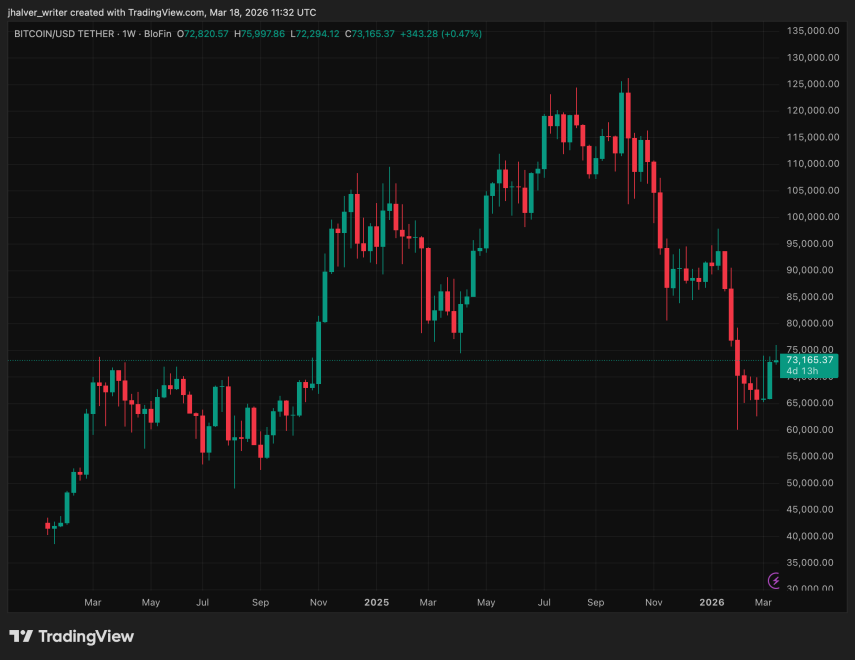
At the time of writing, BTC trades for $73k on the daily chart. Source: BTCUSD on Tradingview
Cover image from Perplexity, BTCUSD chart from Tradingview