For sure you at least sometimes think about earning passive income on your crypto, so you’ve probably come across both CoinDepo and Binance Earn. They’re two of the more talked-about options in the centralized finance space, but they serve very different purposes.
One is a specialized yield platform built from the ground up for maximizing returns. The other is part of the world’s largest cryptocurrency exchange, and it offers a range of yield products as part of a broader ecosystem.
So CoinDepo vs Binance Earn; which one makes more sense for your situation? I’ll break it down.
What Is CoinDepo?
CoinDepo is a centralized crypto-finance platform that launched in 2021 with a singular focus: helping users earn high yields on their crypto and stablecoin deposits. It’s not an exchange. There’s no trading interface or complex DeFi integrations.
It’s easy to use; deposit your crypto, earn interest, watch your balance grow.
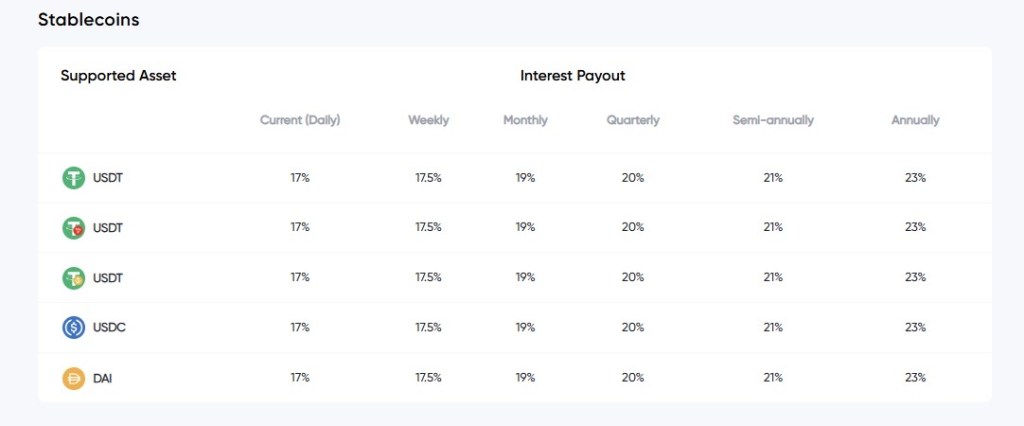
The platform positions itself as a structured yield provider, with advertised APRs ranging from roughly 12% to 23% depending on the asset and lock-up period. Stablecoins like USDC and USDT typically command the highest rates (often reaching up to 23% for longer-term commitments).

CoinDepo uses a compound interest model with selectable payout frequencies. You can choose daily, weekly, or longer-term structures, with longer commitments generally offering better rates. The platform prioritizes simplicity and yield optimization above all else.
What makes CoinDepo interesting is its focus on doing one thing well. It doesn’t try to be everything to everyone. It’s a yield platform, pure and simple. This is what I like, since if you want to earn passive income, I’d look for platforms focussed only on that, at least that’s my preference.
What Is Binance Earn?
Binance Earn is the yield-generating arm of Binance, the largest cryptocurrency exchange in the world by trading volume. It’s not a standalone product but rather a collection of yield options integrated into the broader Binance ecosystem.
The product lineup is extensive. There’s Simple Earn, which offers both flexible and fixed-term savings accounts. There’s staking for proof-of-stake assets like Ethereum and Solana. There’s Launchpool, where you can farm new tokens, and DeFi Earn, which integrates with decentralized protocols in some regions.
Yields on Binance Earn tend to be more conservative than what CoinDepo advertises. Stablecoin rates typically range from about 1% to 9% depending on the product and promotional offers. Binance has very generous promotions where the interest rate can reach hundreds of percent but for short-term periods, usually from three to ten days.
Bitcoin and Ethereum staking generally delivers low to mid-single-digit returns.
The advantage of Binance Earn is ecosystem depth. You can earn yield, trade, borrow, and use your funds across various Binance products without moving assets between platforms. For active crypto users, that integration is valuable.
CoinDepo vs Binance Earn: Comparison Summary
| Feature | CoinDepo | Binance Earn |
| Stablecoin APY | 17%–23% | 1%–9% |
| BTC/ETH APY | 12%–18% | ~0.4%–3% |
| Compounding | Yes | Limited / product-based |
| Yield Structure | Structured fixed tiers | Dynamic ecosystem-based |
| Product Type | Dedicated yield platform | Exchange ecosystem |
| Risk Level | Higher | Lower relative |
It’s also very interesting that CoinDepo, as of today, actually supports more cryptos for earning than Binance.
APY Comparison: Where the Numbers Stand
This is where the difference becomes immediately apparent.
CoinDepo’s Yield Structure
CoinDepo is known for aggressive advertised returns. Stablecoins can earn approximately 17% to 23% APR. Major cryptocurrencies like Bitcoin and Ethereum fall in the 12% to 18% range. Compounding is available with daily, weekly, or monthly options. Longer lock-up periods unlock the highest tiers.
For example, a $50,000 stablecoin deposit at 20% APR would generate roughly $10,000 in annual interest, or about $833 per month. At 23%, that jumps to $12,000 annually.
Binance Earn’s Yield Structure
Binance Earn generally offers more conservative returns. Stablecoin rates typically hover around 1% to 10% plus, though promotional products can occasionally exceed this range (sometimes very aggressive ones where earnings can reach 200 or even 300%, for the short-term).
Rates adjust dynamically based on market lending demand and supply, which means they can fluctuate more frequently than CoinDepo’s structured products.
Overall, CoinDepo clearly offers higher advertised APRs, significantly higher in most cases. But higher yields come with higher risk. The question isn’t just about the number. It’s about whether that yield is sustainable and what you’re giving up to get it.
Product Structure: Specialized vs Ecosystem
CoinDepo: Yield-First Design
CoinDepo’s entire platform is built around yield generation. You deposit crypto, select your term, and earn interest.
The product structure revolves around compound interest accounts with fixed payout schedules. You can choose from daily, weekly, monthly, quarterly, or annual structures. The longer your commitment, the higher your rate.
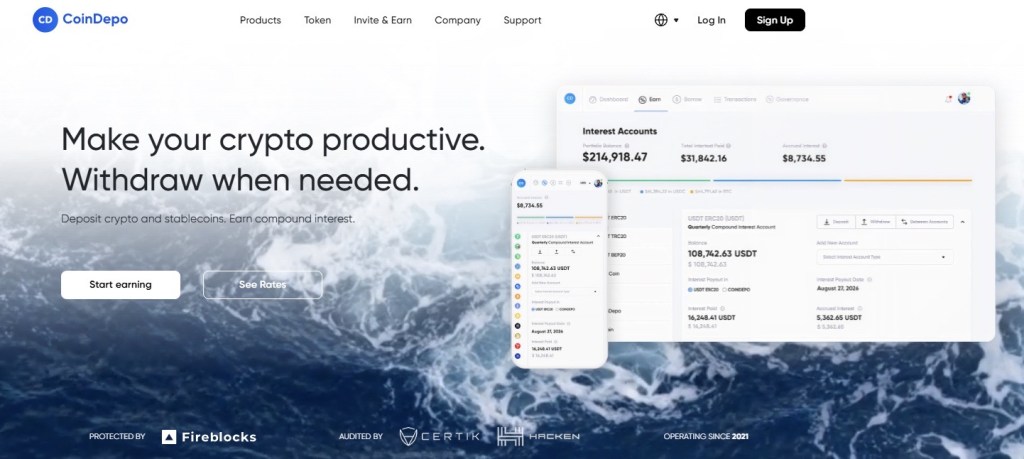
This simplicity is appealing for anyone who just wants to earn passive income without navigating a complex exchange interface. It’s designed for people who want to deposit, earn, and withdraw without needing to understand trading, staking mechanics, or DeFi protocols.
Binance Earn: Ecosystem Integration
Binance Earn is embedded within a massive exchange ecosystem. The product structure is more varied: flexible savings for easy access, locked staking for higher returns, Launchpool for farming new tokens, and DeFi integrations for those who want exposure to decentralized protocols.
The integration is the key advantage. You can earn yield on assets you’re already holding for trading. You can move funds between yield products and trading positions. You can use your holdings as collateral for loans while still earning interest on the rest.
For active traders and crypto ecosystem users, this integration is valuable. For someone who just wants passive income, it might be more complex than necessary.
Flexibility and Withdrawals
CoinDepo’s Approach
CoinDepo offers flexibility, but it comes with tradeoffs. The platform is marketed as having no lock-up requirements; you can withdraw anytime. However, your yield depends on your chosen structure. If you opt for a higher-yield annual account, you’ll lose some of that yield if you withdraw early.
The key insight here is that flexibility exists, but maximizing yield means committing funds for longer periods. That’s similar to how CDs work in traditional banking, just with much higher rates.
Binance Earn’s Approach
Binance Earn has a clearer separation between flexibility and yield. Flexible savings accounts let you withdraw anytime but offer lower rates. Locked staking products require fixed commitments but provide higher returns.
The separation is more explicit, which makes it easier to understand exactly what you’re getting. There’s less ambiguity about what happens if you need to withdraw early.
Risk Profile: What You’re Actually Taking On
This is the most important section of this comparison.
CoinDepo Risk Profile
Any kind of crypto activity is risky. CoinDepo offers more stable APR, because of their investment activities in diversified portfolios and exchanges like Binance have a different business model and they earn mostly from trading and fees so they offer not stable but much more aggressive APRs from time to time when they need short term liquidity.
But it doesn’t make CoinDepo or Binance more risky. It is just two different business models and approaches.
The platform operates through over-collateralized lending and structured capital allocation, but the ultimate returns depend on CoinDepo’s internal yield generation models. If lending losses occur, treasury strategies fail, or the company experiences solvency issues, depositors could face exposure.
Binance Earn Risk Profile
Binance Earn benefits from the exchange’s massive liquidity and infrastructure. Binance is the largest crypto exchange globally, with significant institutional backing and a long track record.
The product segmentation is more transparent, and there’s extensive documentation about how each product works. Security infrastructure is robust, with regular audits and substantial operational history.
That said, Binance is still a centralized platform. Custodial risk exists. Regulatory scrutiny is a reality. And yields, while more conservative, still aren’t guaranteed.
Transparency and Trust
CoinDepo
The platform offers clear APY structures and simple product design. You can see exactly what you’re earning and how the rates work. However, public financial transparency is limited. There’s less institutional disclosure compared to major exchanges.
Binance Earn
The platform has global liquidity and a well-established reputation. However, the product structure is complex, and regional restrictions exist, especially in the United States.
Fees and Costs
The platform typically advertises zero deposit and withdrawal fees. Earnings come from the spread and lending yield models rather than direct charges to users.
Generally, there are no direct fees for using Binance Earn products. However, there are indirect costs through spreads, staking conditions, or ecosystem constraints that can affect your overall returns.
CoinDepo vs Binance Earn: Which One Earns More?
Let’s be direct about this.
If you’re purely looking at the advertised numbers, CoinDepo earns significantly more. Stablecoin yields of 17% to 23% versus Binance’s roughly 1% to 10% range is a dramatic difference. For a $100,000 deposit, that could mean $17,000 to $24,000 annually on CoinDepo compared to $1,000 to $10,000 on Binance.
But (and this is a big but) higher yields come with higher risk. CoinDepo’s rates are exceptional, and exceptional rates require exceptional caution.
However, if you are able to catch a few Binance promotions where you can get 200- 300% for the 7- 10 days you may get almost the same as CoinDepo offers for the whole year
Binance’s lower yields reflect its position as a more established, conservative platform. You’re trading potential return for institutional stability.
Which One Is Safer?
This is the question everyone really wants answered.
Relative to each other, Binance Earn is generally considered the safer option. The exchange has a massive user base, significant regulatory compliance efforts, and a longer track record.
CoinDepo, by contrast, operates in the higher-risk tier of centralized crypto platforms. The yields are higher because the risk is higher. That’s not necessarily a reason to avoid it, but it’s essential to understand.
The most prudent strategy for most investors is diversification across both platforms, or using CoinDepo for a smaller portion of total capital while keeping the majority in more established platforms.
Final Verdict
As I said in the beginning, CoinDepo and Binance Earn serve fundamentally different purposes.
CoinDepo is a yield-first platform optimized for maximum passive income. If your primary goal is earning as much interest as possible on your crypto deposits, CoinDepo offers significantly higher APYs than Binance Earn. The platform is straightforward, focused, and designed specifically for this purpose. For investors who understand the risks and are comfortable with higher yields, CoinDepo is the clear winner.
Binance Earn, on the other hand, is an ecosystem utility product. It’s optimized for capital efficiency within a trading ecosystem. The yields are lower, but the platform benefits from Binance’s massive infrastructure, liquidity, and institutional backing. It’s the safer choice for conservative investors and those who want to keep their funds within an exchange ecosystem.
The strategic difference is straightforward: You’re trading higher yield for lower institutional risk. CoinDepo competes on yield. Binance Earn competes on trust, liquidity, and integration.
For most people, a balanced approach makes sense. If you’re yield-hunting and understand the risks, CoinDepo deserves a spot in your portfolio.
Ultimately, CoinDepo wins on yield. Binance Earn wins on institutional stability. Your choice depends on how much you value higher returns versus greater institutional backing.
Frequently Asked Questions
Is CoinDepo safer than Binance Earn?
Generally, Binance Earn is considered the safer option due to Binance’s larger infrastructure, longer track record, and greater regulatory compliance. However, both are centralized platforms with custodial risk.
Which platform offers higher yields?
CoinDepo offers significantly higher advertised yields, with stablecoins earning 17% to 23% APR compared to Binance Earn’s roughly 1% to 10% range.
Can I withdraw my funds anytime from CoinDepo?
Yes, you can withdraw anytime but the interest is credited at the end of the period. In case of early withdrawal you won’t get interest but there are no fees, no penalties.
Does Binance Earn charge fees?
Generally, Binance Earn doesn’t charge direct fees, but there may be indirect costs through spreads or conditions associated with specific products.
Which platform is better for passive income?
For pure passive income, CoinDepo offers significantly higher potential returns. However, higher returns come with higher risk. A balanced approach might use both platforms.
Is CoinDepo’s 23% APR sustainable?
That’s the question every investor should ask. Yields above 20% are exceptional and come with corresponding risk. Sustainability depends on the platform’s underlying yield generation model and market conditions.
To understand how the income is generated and diversifшув investment strategy, please refer to the business report https://coindepo.com/reports/q1-2026.