In the first three months of 2026, Binance’s security systems blocked nearly 23 million scam and phishing attempts — stopping roughly $1.98 billion in potential losses in just one quarter.
AI Versus AI
That figure is part of a broader push by the world’s largest crypto exchange to fight fraud with the same technology criminals are using to commit it.
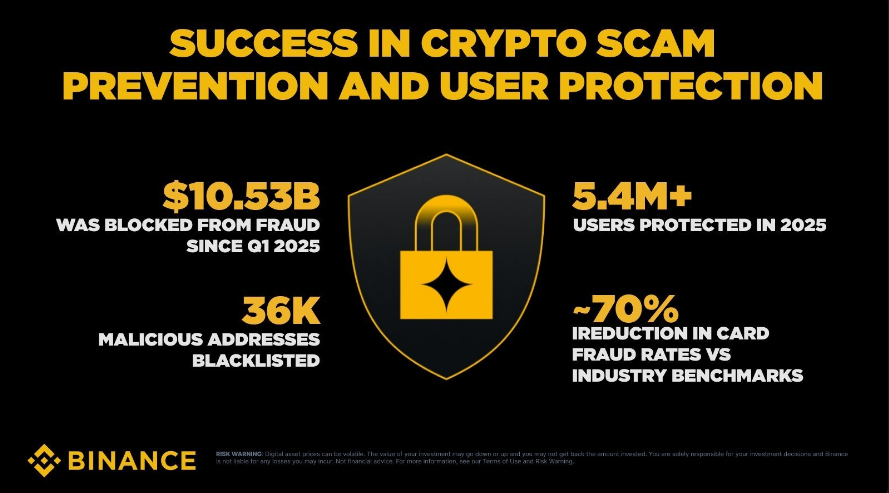
According to Binance, its AI-powered tools prevented a total of $10.53 billion in user losses between early 2025 and March 2026. Over 5 million users were protected during that period, the company said in a blog post Monday.
Binance deployed more than 24 AI-driven security initiatives and over 100 models to get there. Thirty-six thousand malicious addresses were blacklisted as part of the effort.
AI now drives close to 60% of the exchange’s fraud controls, and the company says that has led to a 60% to 70% drop in card fraud rates compared to industry averages.
The technology being used to commit crimes has grown more capable and more accessible. Binance noted that what once took real technical skill can now be done cheaply and at high volume.
Deepfakes, phishing bots, voice cloning, and fake platforms are being used to trick people into giving up their funds — and the cost of running those attacks has fallen sharply.
A Broader Threat
Data shows that crypto fraud is a massive problem beyond Binance’s walls. The FBI said in April that Americans alone lost $11 billion in crypto to scammers, with impersonation of government officials and crypto companies among the most common tactics used against victims.
BTCUSD trading at $80,627 on the 24-hour chart: TradingView
Binance said it has built computer vision tools to catch fake payment screenshots and added real-time language analysis to spot scam patterns as they happen.
On the identity side, the exchange has integrated AI into its verification process to counter increasingly sophisticated deepfakes and what it calls synthetic identities — fake personas built to pass as real users.
Raising The Bar
Fraud in the crypto space has long been a problem, but the tools behind it have become harder to detect and easier to deploy.
Highly organized groups are behind many of these attacks, and officials in the US have moved to crack down on scam operations, including those run out of Southeast Asia.
Binance says the accelerating threat is why it has made AI central to how it protects users. The exchange did not release a detailed breakdown of what types of fraud made up the bulk of the losses it says were prevented.
Featured image from MetaAI, chart from TradingView